CELT Internship 2026
06.12.2025Irish Studies Würzburg is delighted to be able to offer internships for students in cooperation with CELT: The Free Digital Humanities Resource for Irish History, Literature and Politics. Application deadline: January 31, 2026.
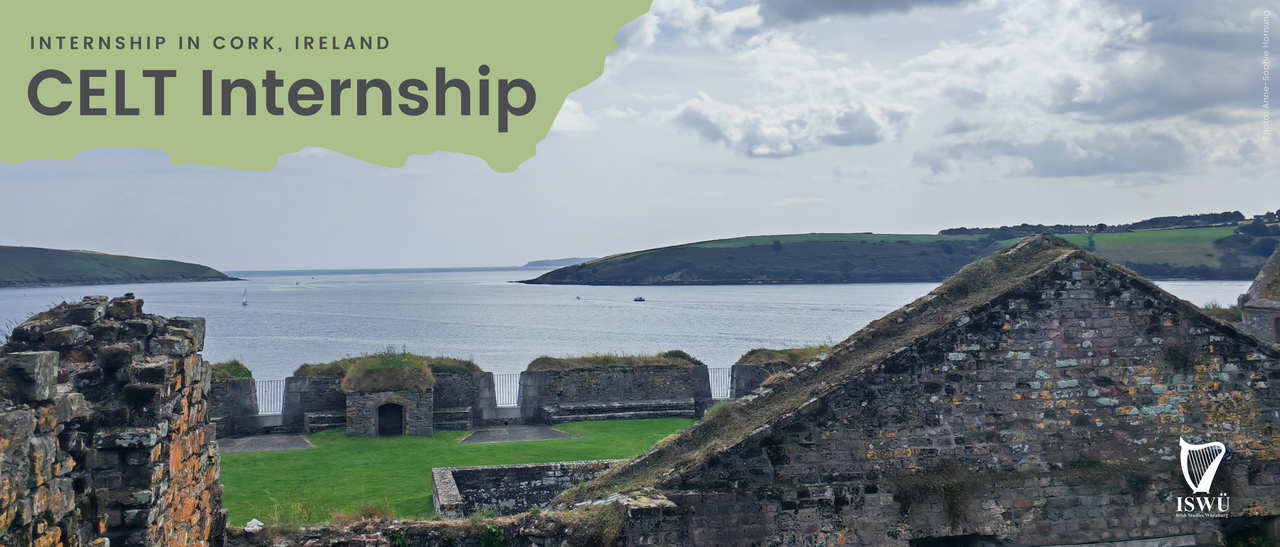
Students can now apply for a four week internship with CELT. The internships will usually take place in summer, between June and August. Under the guidance and supervision of the CELT manager, students will assist in enlarging the corpus of electronic texts available online and enhance their digital humanities skills. Please see the website for more information on CELT.
If you are eligible for an application (see details in our website), please send the following materials:
- letter of motivation
- curriculum vitae
- WueStudy grade overview
as one pdf-file to both ina.bergmann@uni-wuerzburg.de and maria.eisenmann@uni-wuerzburg.de until January 31, 2026 for internships during summer 2026.
Internship Report
by Anne-Sophie Hornung (2025)
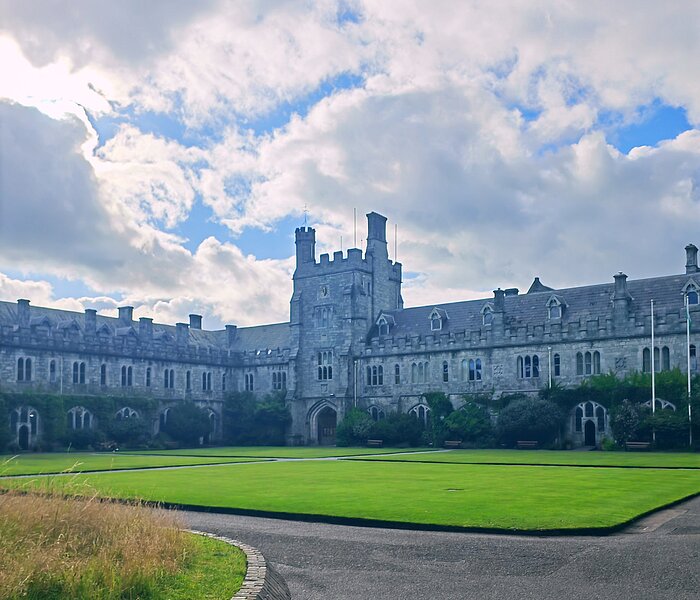
I applied for the internship with CELT at the University of Cork (UCC), Ireland, to gather insight into the field of Digital Humanities for my dissertation project that will potentially venture in this direction. With hitherto no experience in this area, I hoped to acquire a basic introduction into the processes of text digitization and, specifically, how handwritten or printed texts are edited for online publication. CELT (Corpus of Electronic Texts) is a project of UCC´s History Department and the longest running Humanities Computing project in Ireland. Currently led by Dr. Hiram Morgan and Dr. Beatrix Faerber, it provides online accessibility to over 1500 texts from Irish history and literature to scholars around the world, including Anglo-Irish writers since 2006. In corporation with the University of Würzburg, it regularly offers summer internships to students to enhance their digital humanity skills and to enlarge the corpus of electronic texts. My internship with the CELT project at UCC took place from the 21st of July to the 2nd of August 2025. It was supervised by the very welcoming, engaging, and kind Dr. Faerber, the project´s manager, who had helped me with securing accommodation and organization before the trip commenced.
 |  |
During my stay, I had the pleasure to work on a rediscovered and hitherto neglected play set in Ireland in 1917 amidst the on-going quest for Irish independence from the British crown and the challenges of the First World War. At the core of the play “The Crazy Circle” (1921) by Una Pope-Hennessy – also known under her birthname Una Birch – is the ensuing conflict between Irish Catholics and Anglo-Saxon Protestants making up Ireland´s population. Told from the perspective of a minor gentry family, the play delves into the different stances surrounding the Irish nationalist movement, with the nationalist side physically embodied by Catholic villagers. Interestingly, the play is very much informed by Pope-Hennessy´s own experience of this time: The daughter of an English colonial governor, she married into an Irish Catholic family from Cork. This is somewhat of a parallel to the relationships in her play, thus translating this biographical element into fiction. In this sense, it also gives voice to a female perspective of that time, both within and outside of the play.
After an introduction into the encoding process and material from Beatrix, I started applying the TEI (Text Encoding Initiative) recommendations to the texts I had received as a PDF. This involves manually adding a structural and analytical markup consisting of various tags in the text, which helps organize the text for scholars around the world. These tags depend on the kind of text, with differences between drama, letter, novel etc. Once this step is concluded, the finished text is again fed to an XML editor that performs a final check on the added tags and helps you finalize the text for publication. Next to the play “The Crazy Circle”, I worked through these steps with two other texts: On one hand, these were letters by the play´s author Pope-Hennessy that detail her trip to Dublin (funnily enough, with some sightseeing stops that I would later visit there, too); on the other hand, they were journal entries from a French couple´s travel through Ireland and their impressions of the people and countryside. Thus, next to the basic introduction to Digital Humanities, the texts also offered interesting perspectives to Ireland´s history and society. While I completed these tasks on my own in UCC´s library, all other questions of mine related to the digitization of texts, the TEI schema as well as suitable computer applications – and, on another level, also to Irish culture and customs – were promptly answered by Beatrix with openness and expertise during lengthy conversations and check-ups.
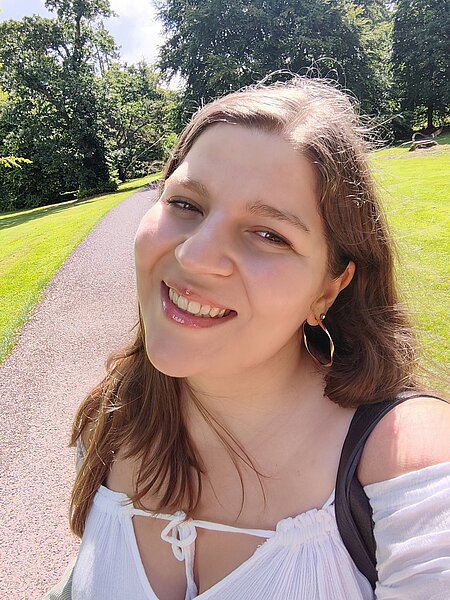
Due to the brevity of the texts, I also had enough time to get to know the University campus and the city of Cork as well as travel County Cork on the weekends. Among others, I was able to visit locations like Blarney Castle (with the famous Blarney Stone and lovely park), the seaport towns Cobh (the Titanic´s last stop on her maiden – and final – voyage) and Kinsale, and, on the last few days in Ireland, its capital Dublin. It speaks volumes, however, on the riches of the countryside and culture that I didn´t manage to see everything I had wanted to see and plenty of hiking trails had to be skipped. On the bright side, through my lovely host, other students on the campus, and, even more so, a number of really nice and welcoming Irish people I met along the way, I caught a thorough glimpse into Irish culture and history. Partially inspired by the political situation in Pope-Hennessy´s play, I learnt about today´s relationship between Ireland and Northern Ireland and the role of religion in a way that is very different from what you read in a newspaper or see on television.
Here, I would like to thank everyone that facilitated my time in Cork, both at JMU and UCC, and made it the enriching journey it ultimately was. Thanks to Beatrix´s ability to explain and break down more complex aspects, I acquired the basic insight into Digital Humanities that I had hoped for. In conclusion, I can only recommend to future students to take this opportunity provided by JMU and UCC, since what you get in return is so much more than the academic experience you initially apply for.