Alumni Fellows
Jonathan Beltz
Jon Beltz recently completed his PhD in Assyriology at Yale University. His research focuses on the religion and literature of ancient Mesopotamia, and in particular the nature of deities and demons and exorcistic magical texts. His dissertation, Namtar: Deity, Demon, Agent of Fate, examines the roles and nature of a Mesopotamian chthonic figure, Namtar, a sort of grim reaper in Mesopotamian mythology. He also has a forthcoming article publishing several Sumerian amuletic incantations and has worked on the function of inscribed amulets in ancient Mesopotamia. At the MagEIA Centre for Advanced Studies he will begin his next project, an updated edition of a group of Sumerian and bilingual Sumero-Akkadian incantations known as zi–pa3 incantations. |
|
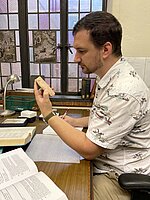
Gideon Bohak
Gideon Bohak is Professor of Jewish Philosophy and Talmud at Tel Aviv University and is one of the leading international experts on Jewish magic in antiquity and the Middle Ages. After studying at the Hebrew University of Jerusalem, he received his doctorate from Princeton University in 1994. Research stays took him to the University of Michigan, among others, before he moved to Tel Aviv in 1997. |
|
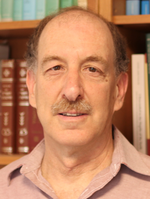
Sevgül Çilingir Cesur
Sevgül Çilingir Cesur's area of research is Hittite magical rituals and the comparative analysis of these texts in terms of paraphernalia, concepts of time and space. In her dissertation, she studied a selected group of ritual material from CTH 390-470 with a holistic approach. She was a postdoctoral fellow at the Julius-Maximilians-Universität of Würzburg, where she worked on concepts of time in Hittite ritual texts. Dr. Cesur is currently working on the publication of the unpublished Bo fragments from the Anatolian Civilizations Museum in Ankara. Since 2017, she has been a full-time lecturer at Ege University. In her MagEIA project, she will work on subsidiary actors and observe their roles in order to portray the diversity of individuals in Hittite magical practices. |
|
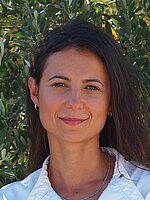
Paola Dardano
Paola Dardano's research focuses on historical-comparative linguistics, particularly the Hittite and Greek languages. Her interests include the morphosyntax and phraseology of Indo-European languages, the theory and methods of etymology, the Indo-European poetic language, and contact linguistics. She was a research fellow of the Alexander von Humboldt Foundation at the University of Cologne from 2008-2009. Since December 2019 she has been a full professor at the Università per Stranieri di Siena. In her MagEIA project she will examine the terminology and phraseology of Hittite magical texts. |
|
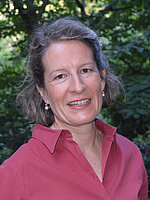
Jan Dietrich
Jan Dietrich is Professor of Old Testament at the University of Bonn with a special interest in ancient thinking modes and ancient cultural approaches to crises. As part of his MagEIA fellowship, Jan Dietrich will delve into the quest for ancient magical modes of thought and magical crisis rituals. Are ancient magical modes of thought structured differently from other ancient ways of thinking? Do magical modes of thought in the ancient Near East differ from those in ancient Egypt, ancient Israel, or ancient Greece? In addition to these questions of intellectual history, Jan Dietrich will focus in particular on the phenomenon of magical crisis rituals and examine the specific ways in which magical rituals are used in times of social crisis. What particular constellations arise in the square of magic, religion, law, and knowledge under crisis conditions, and how is (magical) knowledge generated and used to overcome crises? Jan Dietrich will focus primarily on the complex magical crisis rituals which are manifested in different ways in the plague ritual in 1 Samuel 6 and in the famine ritual in 2 Samuel 21. |
|
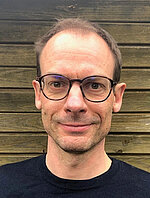
Korshi Dosoo
Korshi Dosoo received his doctorate in ancient history at Macquarie University in Sydney, Australia in 2015. He has since been ATER (lecturer) at the University of Strasbourg, post-doctoral researcher on the Labex RESMED project “Les mots de la paix”, and from 2018-2023 was the leader of the junior research group “The Coptic Magical Papyri: Vernacular Religion in Late Antique and Early Islamic Egypt” at the Julius Maximilian University of Würzburg. His research focuses on magic and lived religion in Egypt from the Ptolemaic to Mamluk periods as revealed by papyrological and epigraphic sources. His work on the MagEIA project will explore the question of the development and representation of magic in Christian Egypt. |
|
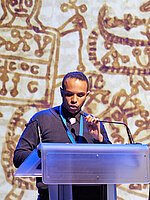
Spencer Elliott
Spencer Elliott is a postdoctoral researcher at KU Leuven, funded by the Research Foundation - Flanders (FWO). His research focuses on the social and historical dimensions of prayers and incantations within archives of the late first millennium BCE. By looking at prayer texts from Late Babylonian Uruk, Persian-period Egypt, and the book of Psalms, he aims to write a history of how traditionally written prayers are collected and practiced in this period of social and political turmoil. At MagEIA, he will examine the textual archives of ritual specialists from Late Babylonian Uruk. |
|
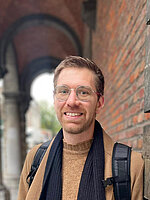
Christopher Athanasious Faraone
Christopher Athanasious Faraone is the Edward Olson Distinguished Service Professor in the Department of Classics at the University of Chicago, where he has taught for the last thirty-three years. His recent books include The Transformation of Greek Amulets in Roman Imperial Times (2018) and Women and Children First: The Earliest Evidence for Ancient Greek Body Amulets, István Hahn Lectures 7 (Budapest 2019). He is co-editor (with S. Torallas Tovar) of The Greco-Egyptian Magical Formularies (2022) and The Greco-Egyptian Magical Formularies: Libraries, Books and Individual Recipes (2022). Faraone has twice been awarded fellowships by the National Endowment for the Humanities and has also won fellowships from the Guggenheim Foundation and the American Council of Learned Societies. He has also been a fellow at the Institute for Advanced Studies in Princeton (twice), the Getty Research Center in Malibu and the Institut d’Etudes Avancées in Paris. |
|
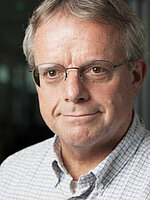
Reuven Kiperwasser
Reuven Kiperwasser specializes in rabbinic literature. He is a research associate Ben Gurion University in Negev and teaching in Polis, Institute for Humanites, Jerusalem. His research interests include the interactions between Iranian mythology, Syriac-Christian storytelling, rabbinic narrative, and trans-cultural relationships between textual communities of Late Antiquity. Schechter publishing house published his critical edition of Kohelet Rabbah (7-12) with an introduction and commentary in 2021. Braun Judaic Studies published his book Going West: Migrating Personae and Construction of the Self in Rabbinic Culture in 2021. A collection of papers he edited with Geoffrey Herman Expressions of Skeptical Topoi in (Late) Ancient Judaism was published by De Gruyter in 2021. A new book written together with S. Ruzer and A. Kofsky, titled: Late Antique Jewish and Christian Travelogues was published in 2025 by De Gruyter. In the framework of MagEIA Reuven Kiperwasser intends to explore the fragile relationships between Rabbinic literature and the roughly contemporary magic texts on incantation bowls. Rabbinic literature includes numerous references to magical practices, expressions and customs, sometimes disdainfully, sometimes with approval. The Rabbis, as others who lived in a world inhabited by evil forces, tried to cope with its demons, as the authors of incantation texts do. Kipperwasser dealt with this topic in “Solomon and Ashmedai Redux”, JQR 111.1(2021), 21-54 and in “The King of Demons in the Universe of the Rabbis”, Demons in Judaism and Christianity: Characters, Characteristics, and Demonic Exegesis. Edited by Hector M. Patmore and Josef Lössl, 274-293. Recently he has dealt with the shared literary world of Babylonian rabbis and the authors of the incantation texts in “The Rabbinic Body in Magical Texts of the Incantation Bowls” in Aramaic Incantation Bowls in Their Late Antique Jewish Contexts. Alexander W. Marcus, Jason S. Mokhtarian, editors, Brown Judaic Studies, 165-184 |
|
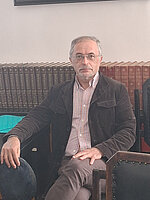
Dan Levene
Professor Dan Levene is a specialist in healing traditions in the Semitic language speaking world, specifically relating to the Christian and Jewish cultures. His expertise in Hebrew, Aramaic dialects, Syriac and Geez has meant that he has been able to focus much of his publication on the production of historical texts that deal with well-being. In more recent years Levene has been working in Ethiopia (where he spent part of his childhood) investigating both historical texts and living traditions. Furthermore, he has been involved with The Tropical Health Education Trust (THET) as a proponent of raising awareness of modern medical doctors’ understanding of traditional beliefs and customs. |
|
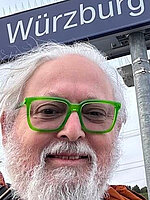
José Marcos Macedo
José Marcos Macedo is a Professor of Greek Language and Literature at the University of São Paulo (Brazil). His primary research focuses on Greek religious language, Greek linguistics, and Indo-European poetics and phraseology. As part of the MagEIA project, he is compiling an annotated lexicon of the divine epithets found in the Greek magical papyri, cross-referencing them with other relevant epithets from epigraphic, lexicographic, and literary sources up to the 4th/5th century CE. The lexicon will also feature “onomastic sequences” that include participles and relative clauses, as well as phraseological parallels (both within and beyond the magical papyri), formulas, and syntagmatic chains of epithets. The lexicon’s appendices will offer, among other things, a list of compound epithets categorized by their first and second elements, a semantic index, and an in-depth analysis of word formation in compound words. |
|
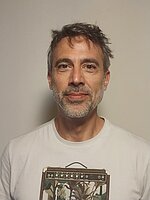
Hrach Martirosyan
Hrach Martirosyan is a linguist specializing in classical and modern Armenian and its Indo-European and Iranian roots. Born in Vanadzor (Armenia), he studied Armenian language and literature and received his doctorate from Leiden University in 2008. His dissertation was published in 2010 as Etymological Dictionary of the Armenian Inherited Lexicon by Brill. |
|
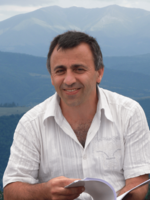
Mersha Alehegne Mengistie
Mersha Mengistie is an Ethiopian studies scholar, philologist and literary scholar. He has been an associate professor at Addis Ababa University since 2018. After completing his teaching diploma, he started working as a teacher in 1995 before completing a B.A. and M.A. degree in Language, Literature and Foreign Languages. In 2010, he received his PhD in Ethiopian Studies from the University of Hamburg (DAAD scholarship). He also obtained a Master's degree in Social Work in 2023. |
|
Bill Rebiger
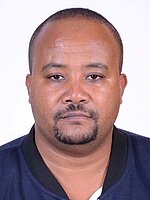
Bill Rebiger is a scholar in Jewish studies with a special focus on Jewish magic and Kabbalah. He has published widely, including editions of two prominent treatises of Jewish magic: Sefer Shimmush Tehillim or ‘Book of the Magical Use of Psalms’ and Sefer ha-Razim or ‘Book of Secrets.’ In his MagEIA project, he would like to develop a theory of performative haptic acts for the phenomenon of magical-ritual healing through the physical touch of a miracle healer or other charismatic personality, as attested in late antique Jewish and Christian texts. |
|
Charlotte Rose
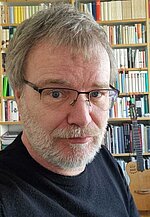
Her project with MagEIA, "Tools of Medicine: Materials in Medical-Magical Spells", addresses the correspondence between medical-magical texts and material culture by examining the relationship between Hieratic medical-magical texts of mainly the Middle and New Kingdoms and the objects pertaining to them, taking a diachronic lens. This research branches off of her dissertation, Changes and Continuity: Ancient Egyptian Birth Practices from the Middle Kingdom through the New Kingdom, which examined the textual evidence and material culture of ancient Egyptian birth and fertility traditions through a diachronic lens. By examining the correspondence between medical-magical texts and material culture, this project aims to render a more complete understanding of daily-life magic. |
|
Gaby Abou Samra
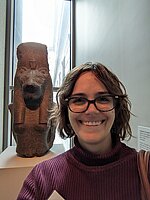
Gaby Abou Samra is Professor of Epigraphy and Semitic Studies at the Lebanese University, Beirut. His research focuses on the iconographic and textual analysis of magic bowls in Aramaic, Syriac and Mandaean. Particular attention is paid to morphology and syntax in order to enable philological analyses and comparisons with other Semitic texts (e.g. Bible, Talmud, rabbinic literature). Prof. Abou Samra's research focuses on Phoenician, Aramaic, Hebrew, Syriac and Arabic inscriptions. |
|
Frank Simons
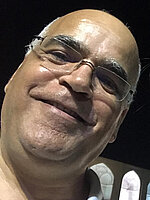
Frank Simons is a postdoctoral researcher at Trinity College Dublin, with a project on Mesopotamian Psychiatry. His research focusses on magic and divination in Mesopotamia, in particular on the reconstruction and poetics of ancient texts. He is also interested in the realia of the ancient world and has recently published papers offering identifications of animals and diseases found in cuneiform texts. |
|
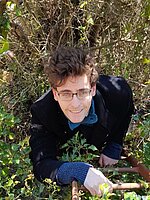
Henry Stadhouders
Henry Stadhouders obtained degrees in Theology, Egyptology, Assyriology and the Classics from the Utrecht and Leiden Universities in the course of the seventies. From 1979 until his retirement in 2014 he hold the position of a Lecturer of Ancient Philologies at the Utrecht Dept. of Biblical and Religious Studies. Over the decades he taught a wide array of classes in Religions & Cultures of the Ancient World, Biblical Hebrew & Aramaic, Ancient Egyptian & Coptic, Akkadian, Greek & Latin, Old and New Testament Textual Criticism. As a researcher he specialises in cuneiform philology with a focus on texts in the realms of the conjurer and physician. In 2015, he became an external collaborator on the Babylonian and Nineveh Medicine Projects and in that framework has published editions of cuneiform medical texts, for the most part in the Journal des médecines cunéiformes. Since 2018, he has been active as an external team member of the Electronic Babylonian Literature Project , contributing on-line editions of mostly unpublished cuneiform tablets. He recently joined MagEIA to avail himself of the opportunity this seminal think tank offers to finalise his edition of the so-called Egalkura texts, a corpus of 50-odd incantations designed to gain the sympathy of authorities and to steer them into deciding in favour of the practitioner of this manipulative type of magic. |
|
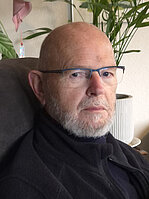
Sofía Torallas Tovar
Sofía Torallas Tovar is Professor at the School of Historical Studies, Institute for Advanced Study, Princeton, and Professor Emerita of Classics at the University of Chicago. Over the past ten years, she has collaborated with Christopher Faraone on the project “Transmission of Magical Knowledge,” dedicated to the reedition and thorough study of Greco-Egyptian magical papyri. Their work was recently recognized with the Goodwin Award of Merit from the Society of Classical Studies (USA). At the MagEIA center they will continue working on the project with the aim of submitting to press the second volume of editions, containing GEMF 55-59 (PGM III, IV and V), to California Classical Studies. |
|