Podcast
This episode of the MagEIA podcast highlights the Horus temple complex at Edfu, the best-preserved temple of ancient Egypt, and presents Martin Stadler’s research on priestly practices and temple architecture. His work examines how the temple and its associated mammisi functioned not only as ritual spaces but also as architectural talismans that channelled divine power. The discussion explores the distinctive Edfu cosmogony, in which Horus appears as creator deity, and reflects on the multifaceted nature of Egyptian gods as simultaneously singular and plural. It further addresses the daily rituals and annual festival cycles performed by different priestly groups, as well as the question of how divine statues and sacred animals were understood in relation to the gods themselves.
Stadler’s research also engages with theoretical debates surrounding the distinction between ‘magic’ and ‘religion’ in the Egyptian temple cult, emphasising the concepts of heka and akh as central categories. A particular focus lies on the apotropaic rituals sa-per (“protection of the house”) and meket-hau (“protection of the body”), which were adapted from royal rituals to the temple context. By analysing the temple inscriptions and their spatial arrangement, Stadler demonstrates how protective texts interacted with the architectural structure to create ritualised zones of divine protection. His work forms part of the Würzburg Edfu Projects, including the Horus Behedety Project, within which he has conducted epigraphic fieldwork at the temple since 2016.
To the Episode at SHWEP
The Bīt Rimki Ritual Cycle
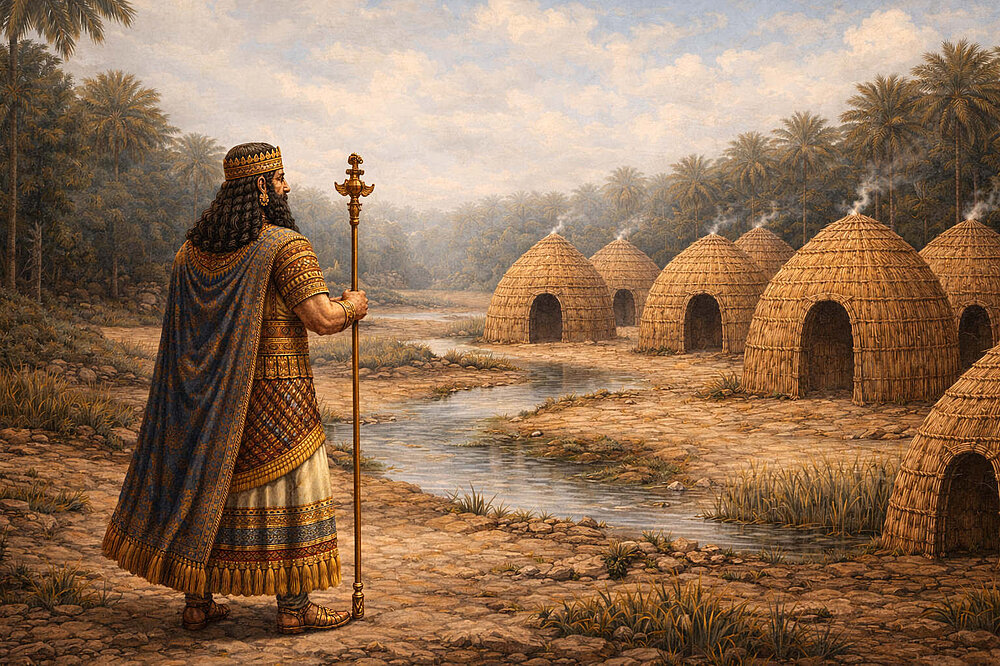
The conversation opens with the compelling figure of the āšipu, a ritual expert previously encountered in their discussion of the Šurpu ritual with Frank Simons. While not a temple priest in the conventional sense, the āšipu was a highly trained specialist who operated in a variety of contexts, including the royal court. Here, the focus turns to another elaborate ritual sequence, the Bīt Rimki (“Bathhouse”), designed to purify the king. They examine the ritual’s first-millennium BCE origins, its surviving textual traditions—divided between procedural instructions and recited incantations—and reconstruct the performance of the ceremony itself. The discussion then broadens to consider the intertwined spheres of “magic,” “religion,” and “politics,” highlighting the limitations of these modern categories for understanding the lived and ritual realities of the ancient world.
The episode also offers insight into the daily scholarly work involved in producing a critical edition of a text such as Bīt Rimki, preserved across hundreds of often highly fragmentary clay tablets. They conclude by exploring themes of secrecy and esoteric knowledge within the Mesopotamian scribal tradition, shedding light on the intellectual and ritual cultures that sustained these remarkable texts.
The Pishra de-Rabbi Ḥanina Ben Dosa
The Pishra of Rabbi Ḥanina ben Dosa is a remarkably concise yet comprehensive work of protective angelic magic, recently edited, translated into English, and analysed by Ohad Abudraham and Gideon Bohak at the MagEIA Centre. The text first survives in fragments from the Cairo Genizah dating to as early as the eleventh century and continued to circulate in amuletic form well into the twentieth century—likely persisting even today. Striking parallels with the Babylonian Jewish incantation bowls of late antiquity, however, suggest a considerably earlier origin, which Abudraham and Bohak place in late-antique Babylonia, possibly even before the Arab conquests.
In this episode, we explore the text’s ritual functions, its historical and cultural setting, and its fascinating connections to both earlier Akkadian magical traditions—where the cognate verb PSHR denotes the act of magical “loosening”—and to contemporaneous late-antique traditions, including Mandæan and Syriac materials. The conversation concludes with a lively range of questions touching on angelology, astrology, the power of sacred sound, and beyond. As ever, Bohak offers insights that are as engaging as they are illuminating.
Listen to it at SHWEP.net
The Mesopotamian Šurpu Ritual
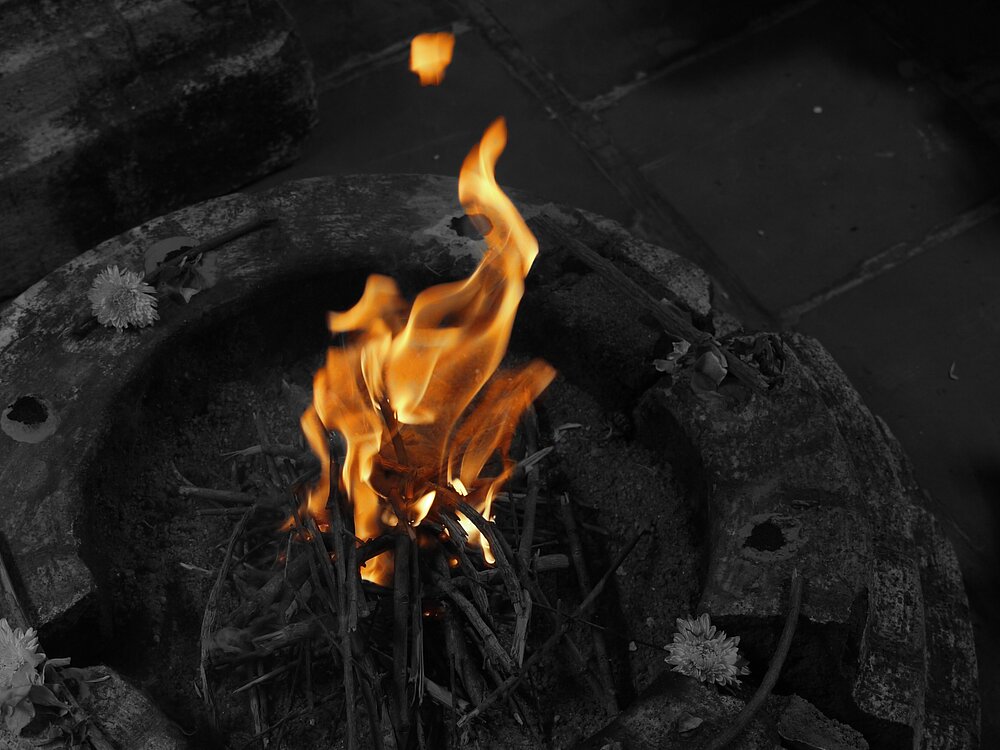
In the latest Roots of Magic episode, Junior Research Fellow Frank Simons guides us through the world of the Mesopotamian Šurpu ritual—literally “Burning”—a complex series of incantations designed to release individuals from the insidious curse known as māmītu. Drawing on cuneiform fragments in Sumerian and Akkadian that span centuries—from Middle Babylonian times into the Seleucid and perhaps even Roman periods—Simons reconstructs both the language and lived reality of this ancient rite.
He reveals that Šurpu operates not as an arcane spell but as a deeply embedded religious practice: through evocative ritual language, it seeks divine intervention. Its incantations are not only liturgical commands but poetic invocations, rich in imagery and rhythm, with symbolic potency that carries therapeutic weight.
Simons brings the ritual to life by animating the actors involved: the ašipu, a ritual specialist who gives voice to the incantations; scribes who preserve and sometimes perform the text; and the afflicted, whose suffering gives the ritual its urgency and reason. In a striking modern parallel, he connects Šurpu with contemporary healing ceremonies in Bali—highlighting how ritual can transcend cultural boundaries by blending poetic performance with psychospiritual relief
The episode culminates in a layered reconstruction of Šurpu’s structure: confessions of wrongdoing, symbolic burning of transgressive elements, transference of misfortune into a surrogate object or being, and a concluding purification—often by water—accompanied by a renewed invocation of divine favor.
Listen to the new Episode at SHWEP
Late-Antique Jewish Magic Bowls, Skulls, and More
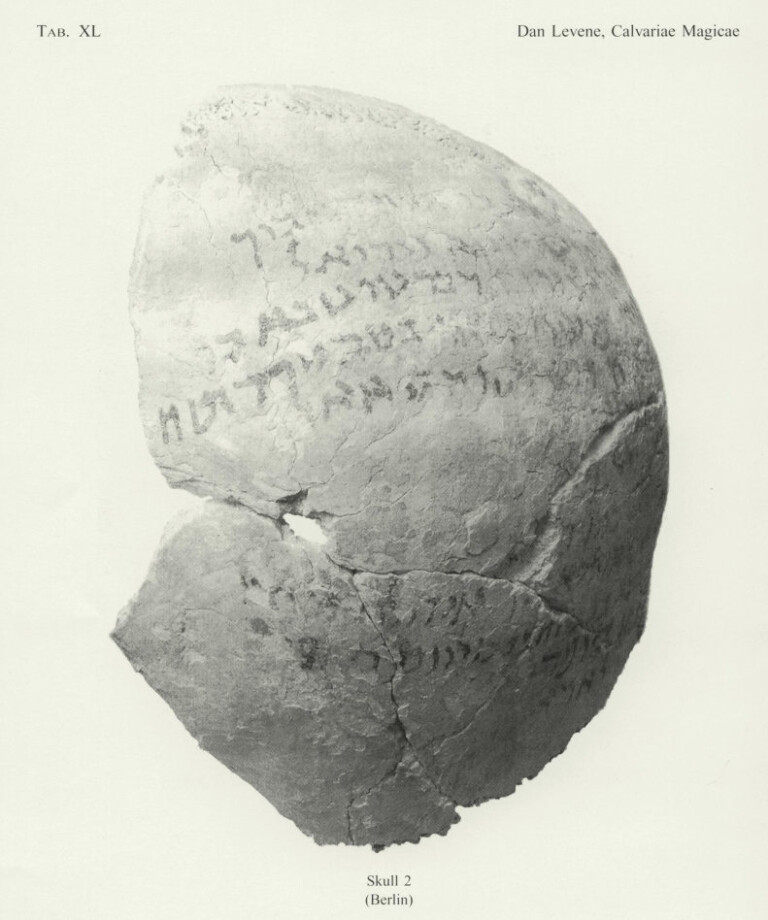
In the recent episode of the SHWEP podcast, Dan Levene sheds light on the enigmatic world of late-antique Jewish magic—particularly the Aramaic incantation bowls of Sasanian Mesopotamia (3rd–7th c. CE). These clay vessels, buried upside-down beneath homes or cemeteries, bear spiraling inscriptions meant to protect individuals from demons, disease, and misfortune. Far from fringe superstition, these objects were deeply embedded in everyday religious life, blending biblical language, rabbinic formulae, and scribal ingenuity into potent ritual tools.
Levene’s research, especially his Corpus of Magic Bowls and Jewish Aramaic Curse Texts, reveals the complex roles these artefacts played—not just in healing or shielding, but also in cursing adversaries. Even more striking are rare examples of human skulls inscribed with incantations—likely used in similarly protective or aggressive rites. These skulls, though exceptional, hint at a ritual world more diverse and experimental than previously assumed.
Through careful philological work, Levene brings these texts into scholarly view, offering a window into a Judaism that was materially grounded, textually rich, and often open to magical experimentation. Magic, in this context, was not a marginal deviation, but a meaningful part of religious practice—where written words were expected to act in the world.
References & further reading by Dan Levene:
- ‘… And by the name of Jesus …’: An Unpublished Magic Bowl in Jewish Aramaic, JSQ, vol. 6, pp. 283–308, 1999.
- ‘A Happy Thought of the Magicians’, the Magical Geṭ, in Shlomo: Studies in Epigraphy, Iconography, History and Archaeology in Honor of Shlomo Moussaieff, R. Deutsch, Ed., Tel Aviv/Jaffa: Archaeological Center Publication, 2003, pp. 175–85 [for sexual metaphors with regard to the Lil-demons].
- Calvariae Magicae: The Berlin, Philadelphia and Moussaieff Skulls (Tab. XXXVII–XLIX), Orientalia, vol. 75, no. 4, pp. 359–79, 2006.
- D. Levene, Ed., Jewish Aramaic Curse Texts from Late Antique Mesopotamia: “May These Curses Go Out and Flee”. Leiden: Brill, 2013.
- The film The Force of Faith can be viewed here.
Facing the Underworld: Jonathan Beltz on Sumerian Death-Demons and How to Deal with Them
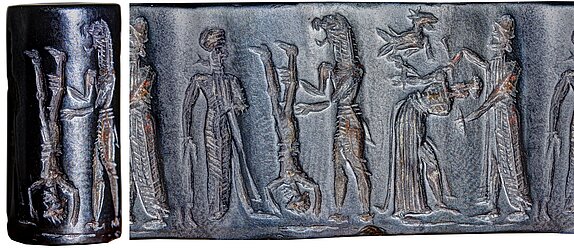
In the most recent episode of the MagEIA Podcast, Jonathan Beltz delves into the haunting world of Sumerian death-demons and the protective strategies developed to confront them:
https://shwep.net/2025/03/26/jonathan-beltz-on-sumerian-death-demons-and-how-to-deal-with-them/
The episode begins with a historical overview of ancient Sumerian civilization, introducing listeners to the cultural and religious landscape of early Mesopotamia. Beltz then turns to the ever-present threat of underworld entities, particularly those associated with sudden illness, unexplained death, and spiritual affliction, like the Udug, a disease-bearing entity; the Gala, a kind of rogue entity, also prone to bringing disease and of course the infamous Namtar the Sumerian ‘angel of death/grim reaper’.
A range of textual sources is explored, including incantation tablets and ritual texts from the famous “Maqlû” and “Šurpu” series. These texts outline protective rites, purificatory actions, and summoning formulas aimed at diagnosing, repelling, or neutralizing demonic threats.
Equally important is the material evidence: Beltz discusses artifacts such as clay figurines, amulets, and ritual paraphernalia used by exorcists (āšipu) and healers. He emphasizes how such objects functioned within elaborate magic-religious ceremonies, revealing the fine line between healing, protection, and the manipulation of divine or infernal forces.
The episode also touches on the role of liminality in Sumerian demonology—thresholds, twilight hours, and transitional states all marked zones of increased spiritual vulnerability. Beltz draws attention to the ways in which both personal and communal ritual activity was mobilized to fortify boundaries between the living and the dead.
Family Matters: Charlotte Rose on Ancient Egyptian Medical Magic for Women and Children
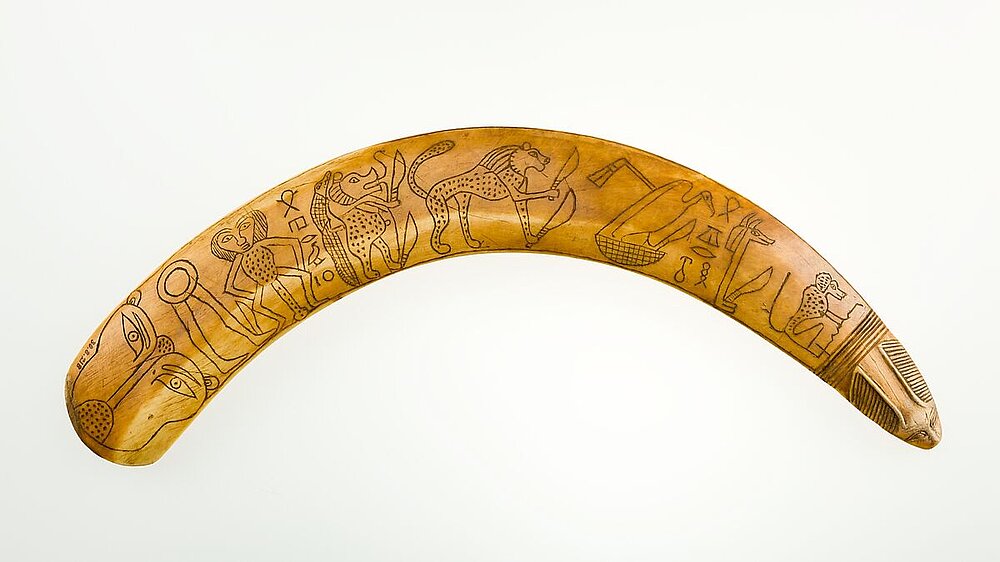
A new episode of the MagEIA Podcast has been released. This time Charlotte Rose talks on Ancient Egyptian medical magic for women and children:
The discussion begins with foundational aspects, providing an overview of the various kingdoms and intermediate periods of ancient Egyptian history. It then explores the dangers associated with childbirth and childhood in ancient Egypt, as well as in premodern cultures more broadly.
Following this, the material evidence related to ancient Egyptian childbirth magic is examined, including protective amulets, ‘birth-bricks’ upon which laboring women would squat or kneel, ‘birth-wands,’ figurines of protective deities, and other related objects. The textual evidence is also considered, focusing on spells written on papyrus aimed at protecting mothers and children, preventing miscarriage, accelerating labor, and addressing a range of medical concerns.
An attempt is made to reconstruct the birthing chamber, considering its occupants and their roles. Beyond the natural risks of childbirth, mothers also feared malevolent spirits, as the birthing space bridged the living and the dead. This liminality and its magico-religious aspects are explored through the available evidence.
"Roots of Magic": New podcast series with MagEIA members at The Secret History of Western Esotericism!
MagEIA has started a cooperation with The Secret History of Western Esotericism Podcast by Earl Fontainelle (https://shwep.net/) in order to talk about our work on ancient magical traditions in a new interview series called „Roots of Magic“. The first two interviews are already available:
- Daniel Schwemer with an introduction of the MagEIA project:
https://shwep.net/2024/02/21/daniel-schwemer-on-the-mageia-project-at-the-university-of-wurzburg/
- Svenja Nagel on erotic magic in Graeco-Roman (and earlier) Egypt:
https://shwep.net/2024/11/13/svenja-nagel-on-ancient-egyptian-erotic-magic/