Ağalıqtəpə
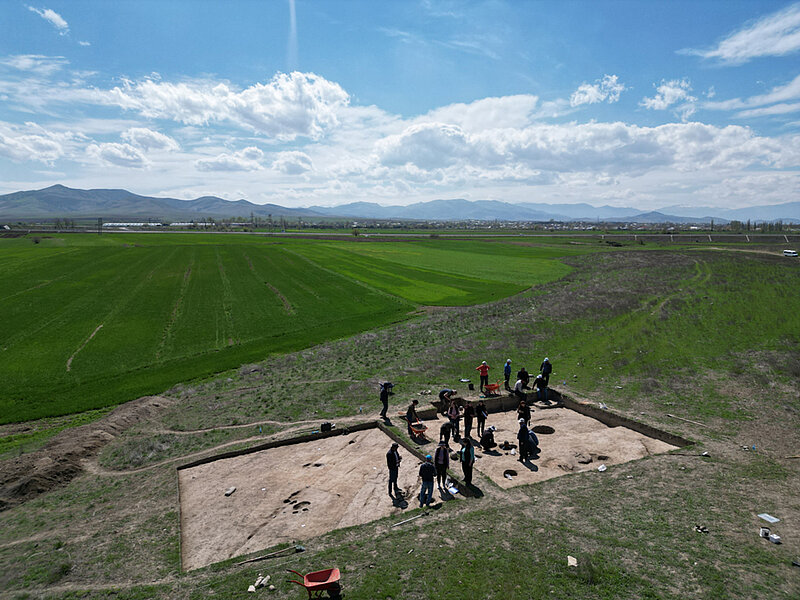
In March 2025, a joint expedition of the Institute of Archaeology and Anthropology (AAİ) in Baku and the University of Würzburg conducted the first excavation season at the previously unexplored settlement mound of Ağalıqtəpə.
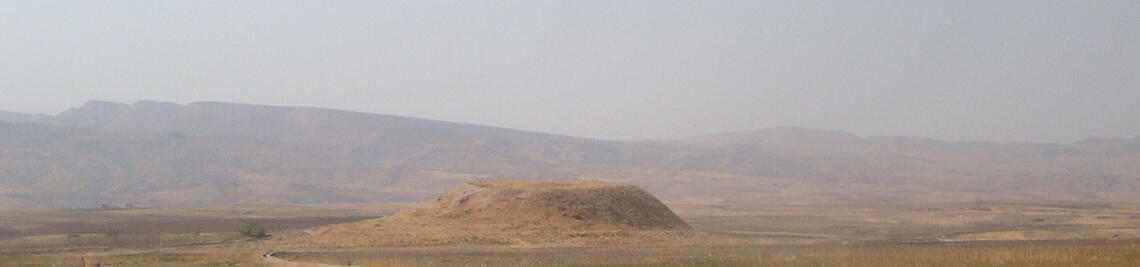
Located between the village of Dağ Kəsəmən and Ağstafa, the site forms a hillock approximately 100 m wide and 330 m long, rising about 5–6 m above the surrounding fields. The exposed mudbrick architecture belongs to a building comprising at least four rooms datable to around the mid-1st millennium BC. The floors of the rooms were covered by an ashy layer, which appears to be related to various small pits – probably the remains of metal furnaces. Evidence of metal production was found in the form of large quantities of slag and fragments of clay walls of furnices in various areas of the excavation site. Another room contained a large, 1.3-metre-high clay vessel sunken into the ground. Its unusually wide opening, measuring more than one metre, was level with the room's floor. The vessel's surface was adorned with incised line ornaments and a wavy, comb-like design. Various pear-shaped storage pits had been cut into the buildingand from a later level. The latest remains consisted of several burials, most likely medieval.