

Research
This page provides an overview of current and past research projects conducted by the Chair of European Ethnology at the University of Würzburg. The projects reflect the thematic diversity and interdisciplinary orientation of the department. They offer insights into ongoing academic work and document the research focus areas of recent years.
Project management: Prof. Dr. Michaela Fenske
(2025-2030)
Funded by Volkswagen Foundation
Practice partner: Bayerische Gartenakademie, Head: Claudia Schönmüller
People are increasingly becoming aware of the need for transformation within their everyday world. In this respect, private gardens constitute arenas of learning transformation within the polycrisis by small scale activities that add up to produce major effects. The transformation asks for new practices, plants, and fruits, as well as for new attitudes, ethics, and aesthetics.
The Chair of European Ethnology/Cultural Analysis at the University of Würzburg and its partner, the Bavarian Academy for Private Horticulture, combine their theoretical and practical expertise to understand transformation within the context of private gardens
Project management: Prof. Dr. Laura Otto
Duration: Start 2025
Project number: 545621262
More information: Seite des Projekts
Still waters run deep – not just as a metaphor but also in their literal sense, quiet waters hold immense significance. Lakes and ponds are habitats, food sources, and foundations for economic activities. The research project AquaNaturesCultures explores still waters in the Anthropocene from an anthropological perspective. It combines approaches from rural anthropology, NaturesCultures debates, and multispecies research, focusing on a previously overlooked topic: still water economies. Four ethnographic case studies in Bavaria examine long-established practices like pond forming and lake fisheries, alongside more recent approaches such as aquaponics and algae cultivation. The project highlights knowledge transmission, multispecies interactions, and the future of these economies. The findings provide critical insights into sustainable agriculture, species conservation, and food security, enriching both anthropological and practical discourses. Ultimately, the project asks: How can still waters shape the future of agriculture – and life on Earth?
PhD project, Pearl-Sue Carper, M.A.
The planned dissertation project deals with the significance of the rosehip from a cultural anthropological perspective and the discourses and possibilities it opens up. Known and regionally located in everyday culture as a 'native' wild fruit, the fruit of the rose is used in a variety of ways and, as a hedge plant, is not only a component of landscape design but, for example, in the form of food, is equally essential to the everyday lives of human and non-human creatures. Despite its widespread use as a native rose tree and its local cultivation, in Germany it is largely imported for industrial processing into, for example, teas, jams and cosmetics. The focus of this work is on the interwoven relationships between the rose and the plant.
This work focuses on the interweaving of locality and globality, non-human planted stands and plantation cultivation, economic and ecological aspects as well as the common becoming of humans, plants and animals. Using the example of the everyday fruit rosehip, these complex relationships are analysed against the backdrop of current ecological crises, with recourse to post-anthropocentric theories, and the power of the rosehip to act and have an impact is elaborated. In this way, the study aims to contribute to an understanding of the possibilities for shaping rural spaces and economies as well as the production of basic products of human life under the conditions of the Anthropocene.
Doctoral studies at the graduate school since winter 2021/2022.
PhD project, Luise Stark, M.A.
In times of climate change and species extinction, nature documentaries are taking on new tasks. At the same time, wildlife film itself is undergoing a transformation. Television is currently in the process of changing from linear, predetermined programmes to content that can be accessed at any time (on demand). Public media libraries have to compete with newcomers such as Netflix and Amazon Prime, which provide multi-million euro budgets for their productions. In the course of this change, there are initial approaches to retelling nature documentaries. New perspectives should fulfil the needs of viewers and ensure good viewing figures in times of visual overload.
The dissertation project is dedicated to the production processes of cinematic nature narratives. The basic questions are: Under what production conditions are current wildlife film narratives produced? And how is the encounter between film-makers and other species characterised within the production process of ‘nature documentary’ projects from Germany?
This work will contribute to a better understanding of more-than-human narratives by making visible the individual decisions and practices that are no longer visible in the published film. The already much-researched narrative of ‘nature’ will be examined specifically in nature documantary production. The possibility of applying the concept of more-than-human agency to the analysis of production processes will be examined.
Project team: Prof. Dr. Michaela Fenske, Dr. Sandra Eckardt
Duration: 2022-2025
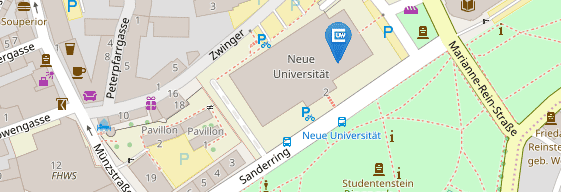
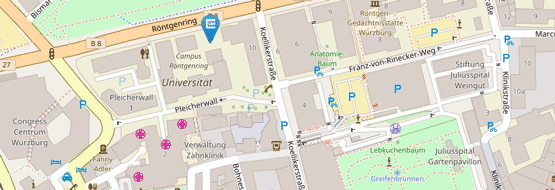
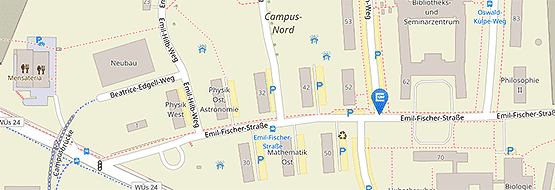
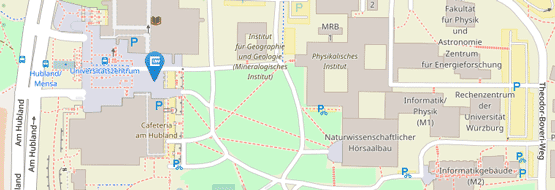
A university campus is a place of learning, a place of food production, a habitat for many species, a space for recreation, a possible place for energy production, a potential building site for the expansion of university building areas and much more. A lively campus invites people to linger, is a place of encounter and creates a positively stimulating atmosphere for learning and intellectual exchange. The university campus is, thus, one of the soft factors in the positive development of university locations. This is increasingly combined in today’s world with the challenge of redesigning the campus in terms of the necessary socio-ecological transformation.
Project management: Prof. Dr. Laura Otto
Duration: 2021-2025
Project number: 461841531
More information: Seite des Projekts
Microplastics, industrial waste, and overfishing are widely recognized as major anthropogenic threats to ocean ecosystems. However, less attention has been given to a growing phenomenon: harmful algae that increasingly impact both oceans and coasts. These algae erode beaches, block photosynthesis in corals and seagrasses, and cause lasting ecological changes. Their frequency, volume, and spread are rising, particularly evident in the Caribbean, where unprecedented quantities of Sargassum algae have washed ashore in recent years. This threatens tourism, ecosystems, and human health. The research project examines Sargassum and emerging practices of interacting with algae in Mexico and Barbados, key hotspots of the “algae problem.” Using ethnographic methods, it explores how anthropogenic environmental changes are governed and commodified in daily life along tourist-oriented coasts. The study adopts a multi-sited, multi-actor, and multis-pecies approach, contributing to cultural anthropology and NaturesCultures debates, with a focus on commodification, responsibility, and governance.